

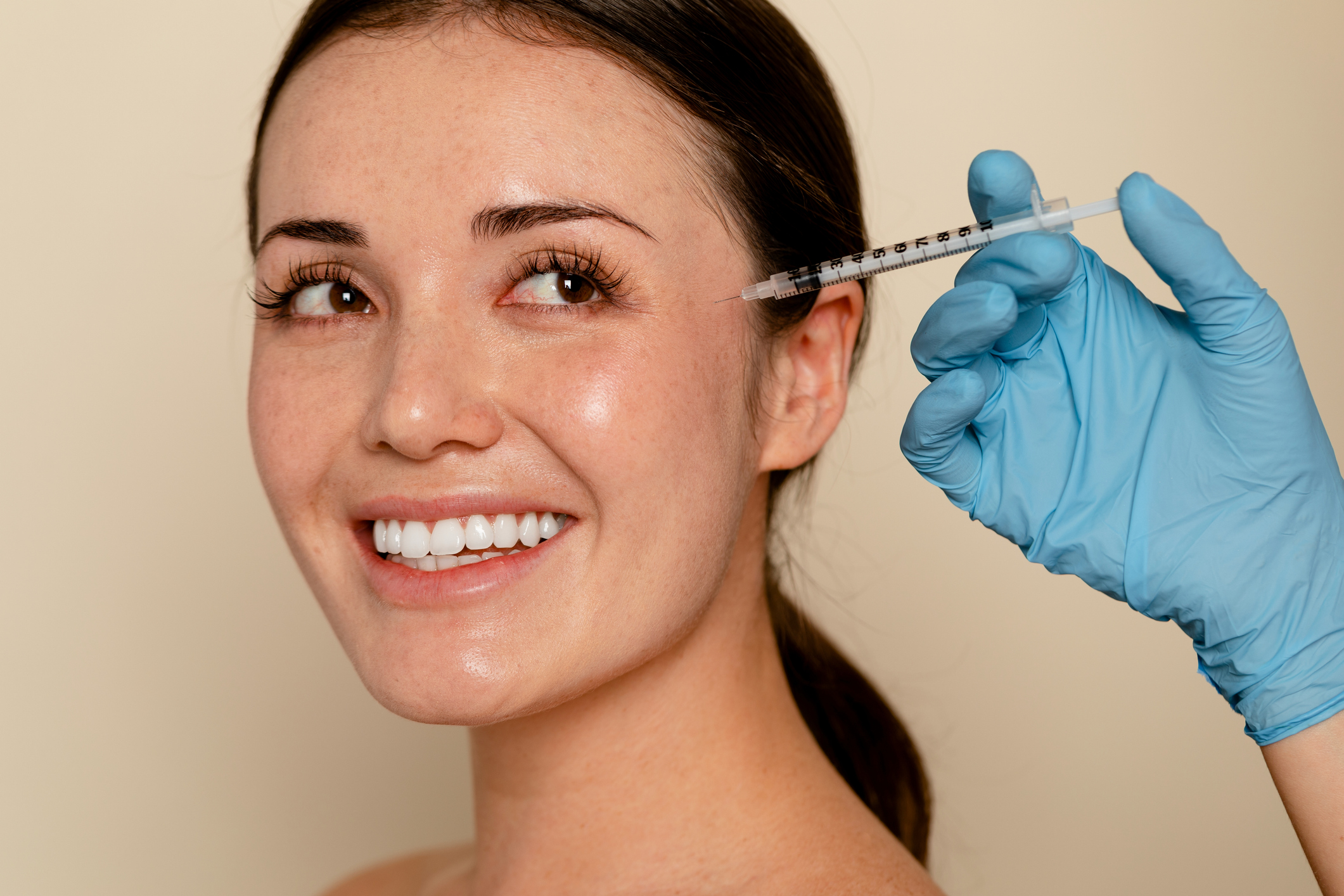
Gen Z has been one of the most-discussed cohorts in medical aesthetics for the better part of a decade. Their share of the patient population has grown steadily, and their preference for preventive care has been widely noted. But now that the oldest among them are entering their late 20s, there’s a growing interest in how these patients actually move through the market once they’re in it.
Understanding a patient cohort means going beyond share figures alone. Qsight 2025 data traces Gen Z aesthetic patients across first-treatment behavior, ongoing service patterns, annual spend, and geographic demand concentration to give aesthetic medicine and beauty brands a clearer operational picture of who these patients actually are.
Key Takeaways: Gen Z & Aesthetics Industry Trends
- Gen Z enters the aesthetic market needle-first: neurotoxins are the dominant first treatment at the category level.
- Laser hair removal leads Gen Z’s ongoing aesthetic procedure activity by visit count, but Botox captures the most dollars.
- Gen Z aesthetic spending is right-skewed: a smaller high-frequency patient segment drives a disproportionate share of revenue.
- Neurotoxin share among Gen Z grew from 12% of total non-surgical spend in 2021 to 20% in 2025.
- Geographic concentration data points to specific U.S. markets where Gen Z activity is highest, giving sales teams more precise starting points for territory planning.
Gen Z Beauty Trends: How They Enter the Market
For older patient cohorts, the aesthetic journey often began with a specific concern, like a line, a spot, or a texture issue. From there, they worked toward a treatment. Gen Z is moving differently.
Among Gen Z patients entering aesthetic practices for the first time in 2025, neurotoxins are the dominant entry point at the category level, outpacing energy-based devices and non-EBD skin rejuvenation.
At the individual treatment level, first-time Gen Z aesthetic procedures rank as follows:
Qsight data, 2025
Gen Z first-time aesthetic treatments
Ranked by frequency among first-time patients entering a practice in 2025
Botox®
Laser hair removal
Dysport®
Hydrafacial
Aesthetician services
Source: Guidepoint Qsight Sales Measurement, 2025. Rankings reflect frequency of first-time treatments among Gen Z patients.
The pattern points to a cohort that is arriving at medical spas or practices with a treatment plan already in mind, rather than working up to injectables after exploring lower-commitment options first.
For brands, this has real implications for how first-touch acquisition is framed. If neurotoxins are the entry point rather than the destination, the patient education, messaging, and practice-level experience surrounding a first injectable appointment carry more weight than they might for older cohorts.
Longer-Term Beauty Industry Trends: What Gen Z Keeps Coming Back For
Once these patients are in the market, their ongoing treatment behavior splits in an interesting way, depending on how you measure it. By visit frequency, laser hair removal leads as the most common ongoing service among Gen Z patients. By total dollars spent, Botox takes the top position.
A brand or sales team measuring demand purely by transaction volume would reach different conclusions than one measuring by revenue contribution. Laser hair removal generates consistent foot traffic; neurotoxins generate the spend. Both points are useful, but they’re telling different parts of the same story.
Also worth noting is that compounded semaglutide cracked the top five most frequently used services in 2025, alongside laser hair removal, Botox, Dysport, and Hydrafacial. Weight loss medications entering the Gen Z aesthetic treatment mix is something brands in adjacent categories should be paying attention to.
Qsight data, 2025
Gen Z ongoing aesthetic treatments
The same cohort tells two different stories depending on how demand is measured
By visit frequency
Laser hair removal
Botox
Compounded semaglutide
Dysport
Hydrafacial
By dollars spent
Botox
Laser hair removal
Dysport
Weight loss medications
Hydrafacial
Source: Guidepoint Qsight Sales Measurement, 2025. Ongoing non-surgical services among Gen Z patients.
What Gen Z Actually Spends on Aesthetic Services
Aggregate spending figures for a patient cohort can obscure as much as they reveal. The average annual non-surgical spend for a Gen Z aesthetic patient in 2025 is $940, but the median is $520. The gap between those numbers is the more telling figure.
It indicates a right-skewed distribution: most Gen Z patients are spending closer to $520 per year, while a smaller segment of high-frequency, high-spend patients is pulling the average upward. That smaller segment is carrying a disproportionate share of total Gen Z revenue.
Brands and sales teams should keep in mind that not all Gen Z patients represent equal opportunity. The real commercial value lies in the ability to identify and retain the high-frequency segment early—before competitors do.
Qsight data, 2025
Gen Z aesthetic spending distribution
The gap between average and median reflects a right-skewed distribution — a smaller high-frequency segment drives a disproportionate share of revenue
Average
Median
Annual spend
Average
$940
Median
$520
Visits per year
Average
2.75
Median
2
Invoice size
Average
$420
Median
$275
Source: Guidepoint Qsight Sales Measurement, 2025. Non-surgical spend among Gen Z patients.
Where Neurotoxin Demand Is Concentrated in the United States
Neurotoxins clearly aren’t just a Gen Z beauty trend. Their popularity continues to grow across the non-surgical aesthetics market, jumping to $6.4 billion in 2025.
Qsight data identifies the states where each generation accounts for the largest share of total neurotoxin spending, and the leaders aren’t necessarily the markets that come to mind first.
Among all neurotoxin spending in South Carolina, 10.5% comes from Gen Z patients, the highest concentration of any state. The leaders look different across generations:
Vermont leads among Millennials at 48.9%
Arkansas leads among Gen X at 43.7%
Hawaii leads among Boomers and older at 36.8%
Each generation concentrates its neurotoxin spending in different markets, and Gen Z’s doesn’t map cleanly onto the ones that came before it.
For sales teams, that kind of generational market mapping can change how territories get prioritized, where med spa and practice outreach gets concentrated, and which markets warrant closer attention.
Qsight data, 2025
Neurotoxin share leaders by generation
Each generation concentrates demand in different U.S. markets — Gen Z’s hotspots don’t follow the patterns set by older cohorts
Generation
State leader
Neuro share
Gen Z
Born 1997–2012
South Carolina
10.5%
Millennials
Born 1981–1996
Vermont
48.9%
Gen X
Born 1965–1980
Arkansas
43.7%
Boomers+
Born before 1965
Hawaii
36.8%
Source: Guidepoint Qsight Sales Measurement, 2025. Neurotoxin share figures reflect each generation’s share of total neurotoxin spending in that state.
Read More: Why Sales Planning in Medical Aesthetics Needs a Reset in 2026
What This Means for Aesthetic Brands
Gen Z isn’t a uniform patient population. They enter the market with a treatment already in mind, return for services that don’t always correlate by volume and spend, concentrate their dollars in a smaller high-frequency segment, and cluster geographically in ways that don’t follow older generational patterns.
Each of those characteristics requires a different level of granularity than category-level data provides. Capturing those distinctions means getting closer to the patient: to the individual visit, the invoice, and the treatment mix.
How Qsight Aesthetic Data Tools Empower Aesthetic Brand Strategy
Qsight Sales Measurement tracks real-time patient spending at aesthetic practices and medspas, giving brands and sales teams the ability to monitor treatment frequency by cohort, basket composition, and spend per visit. For teams building a strategy around Gen Z, that level of granularity is the difference between knowing the trend and knowing how to act on it.
Combined with Prospector’s geographic practice database, brands can move from cohort-level insight to market-level execution, identifying which territories index highest for Gen Z activity and prioritizing outreach accordingly.
Gen Z’s aesthetic footprint isn’t just a projection anymore. The data is here, and the tools to act on it are too.
Get This Level of Visibility for Your Brands and Markets
The behavioral patterns in this post are drawn from Qsight’s real-time patient spending data. If your team wants to track treatment frequency, spend distribution, and geographic concentration for your specific brands and markets, let us show you how. Request a demo to get started.